- BEFORE FIGMA
- NO ADVANTAGE
- ABOUT US
- NO LIGHT
- no scroll
- ZERO REDIRECT
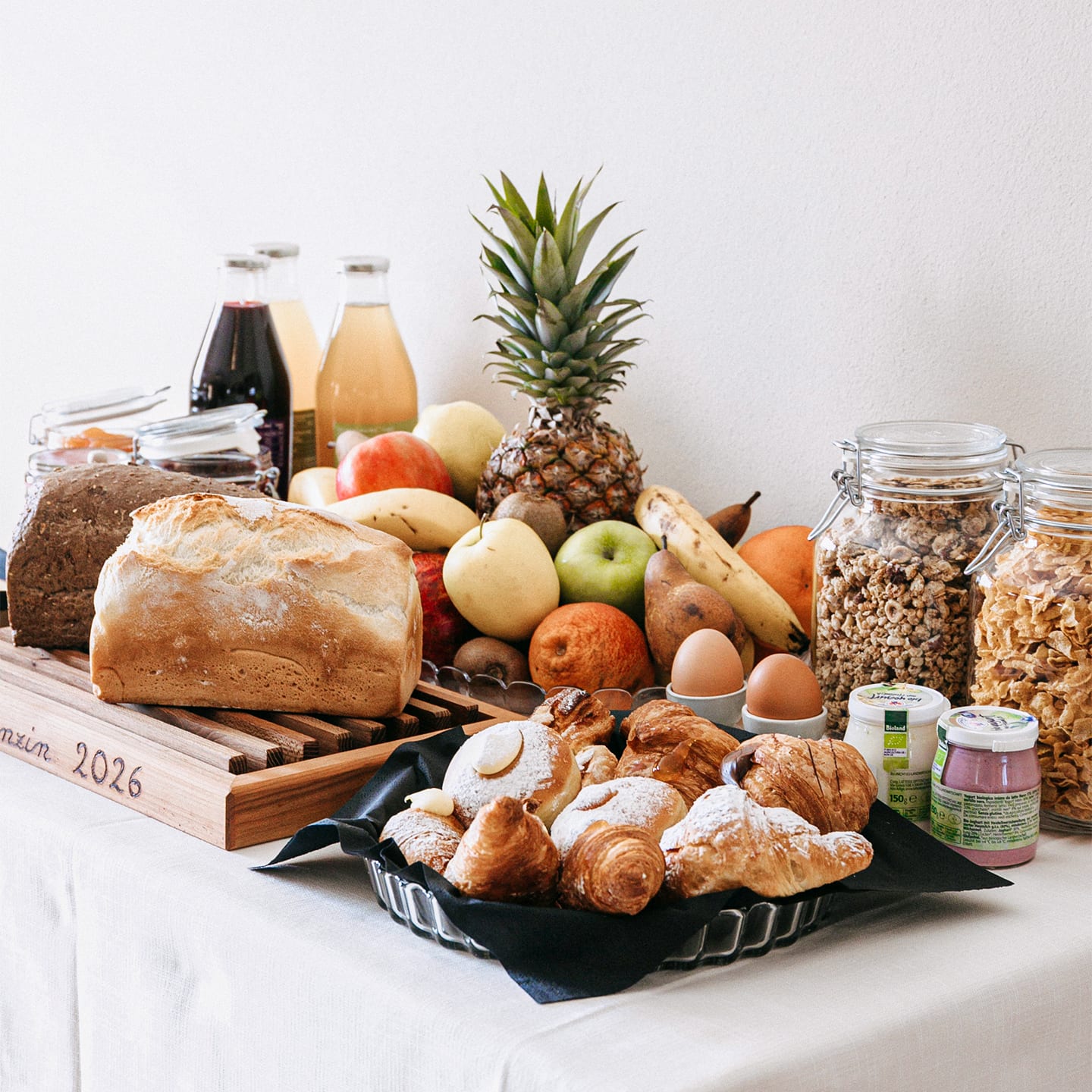
Before the website, everything else was missing.

I arrived with a question about the website and left with three hundred questions about them.
They had a logo and a property ready to open. They didn't have a target, a positioning, or a story to tell. The local B&B market is saturated—every house with three spare rooms goes on Booking and cuts prices. Entering like that was a losing battle from the start. The first thing I did wasn't opening Figma. I asked questions. Who comes here? Why choose you over the others? What do you offer that can't be found five kilometers away? From those slow, sometimes uncertain answers, a direction emerged: don't sell a room, sell silence. Leave the world outside.
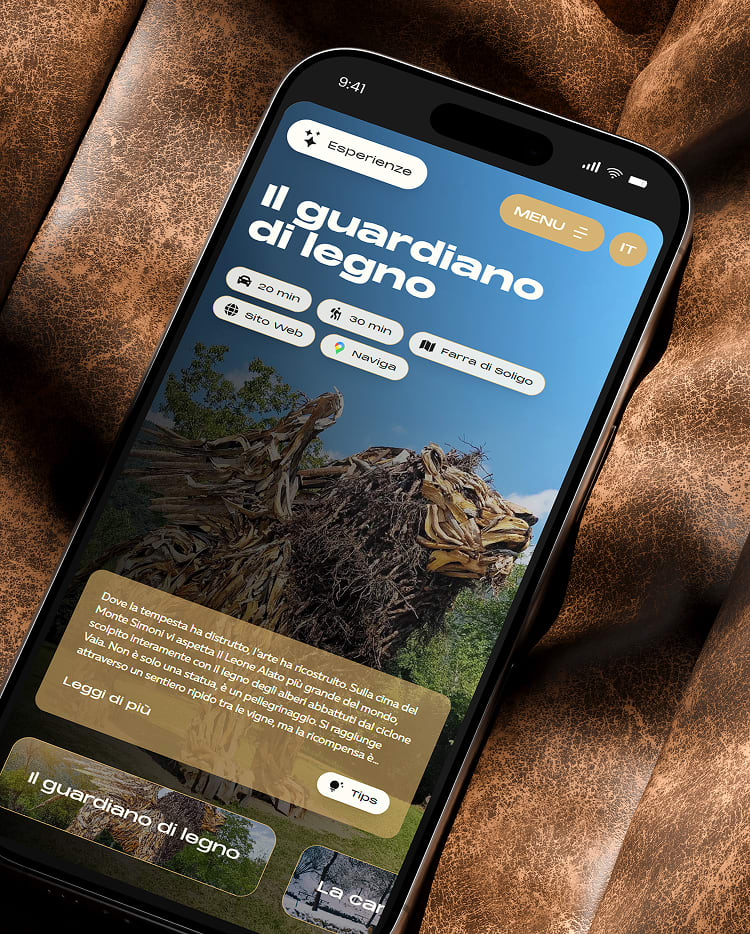

They had nothing unique. So I built it.
I looked at the competitors. They were all selling the same thing: a room, a breakfast, a view. Nobody was selling the territory.
I asked what set them apart from other B&B's in the area. They couldn't answer, and it wasn't their fault. In a market where everyone offers the same thing, the advantage isn't found—it's built. I studied the area. Competitors had templated websites: about us, rooms, breakfast, booking. Zero territory, zero character. Nobody told the story of what was outside the door. That's where I saw the space. I proposed an experiences section—not the standard tourist list, but the things only locals know. Kitesurfing on the lake with the thermal wind that rises after 1 PM. Trails you won't find on Google Maps. Places to eat that don't even have a website. Three categories, narrative tone, no lists.
The 'about us' didn't interest anyone.
Who you are doesn't matter to someone seeking rest. What matters is what they will find.
They had five lines quickly written about who they were and how long they had existed. The classic 'about us' that nobody reads—not because it's poorly written, but because it's the wrong question. Anyone landing on a B&B website isn't looking for a biography. They're looking for an answer to a question they don't yet know how to ask: will I be well here? I threw away the 'about us'. In its place, I built a first-person narrative of silence—not the silence of spas and pools, but the real one. The noise dying down. The air changing. The moment you stop checking your phone. The text flows with deep breaths, one sentence at a time, with a text reveal that slows down reading and makes it physical. At the end, the phrase that sums it all up appears: Leave the world outside. You're not describing a place. You're making them feel how it feels when you're there.
Night in the mountains doesn't end when you go to bed.
Everyone shows the view by day. Nobody tells what happens after.
In the mountains, the night is not an absence—it's something else. The darkness, the rain on the roof, the meadow under the full moon. No competitor talked about it. I built a section with three selectable states—not a gallery, a choice. The interface makes you do exactly what you would do there: wait and choose what to look at outside.
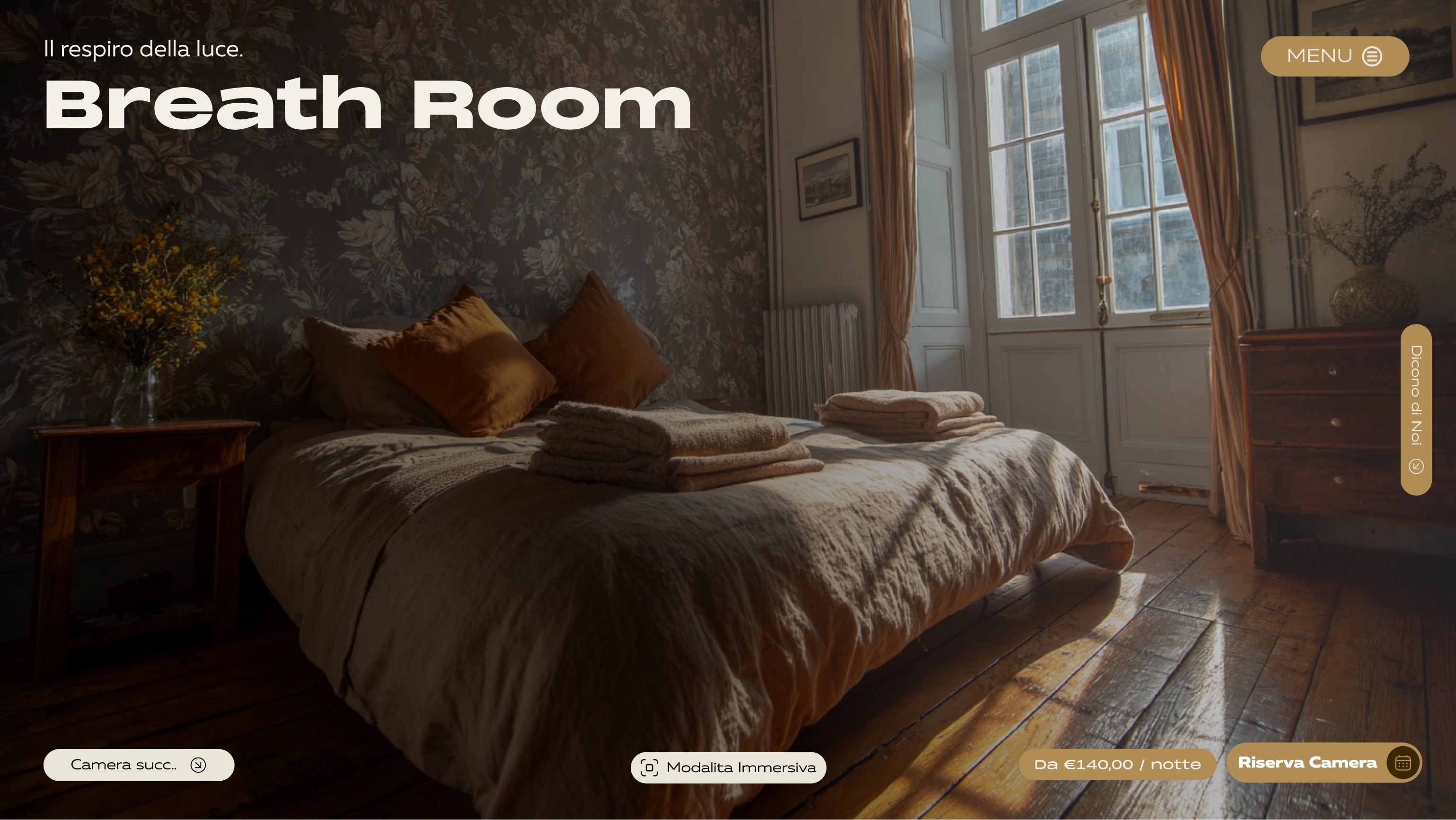
The home scrolls. The rooms do not.
Scrolling makes sense when you are discovering. Not when you are choosing.
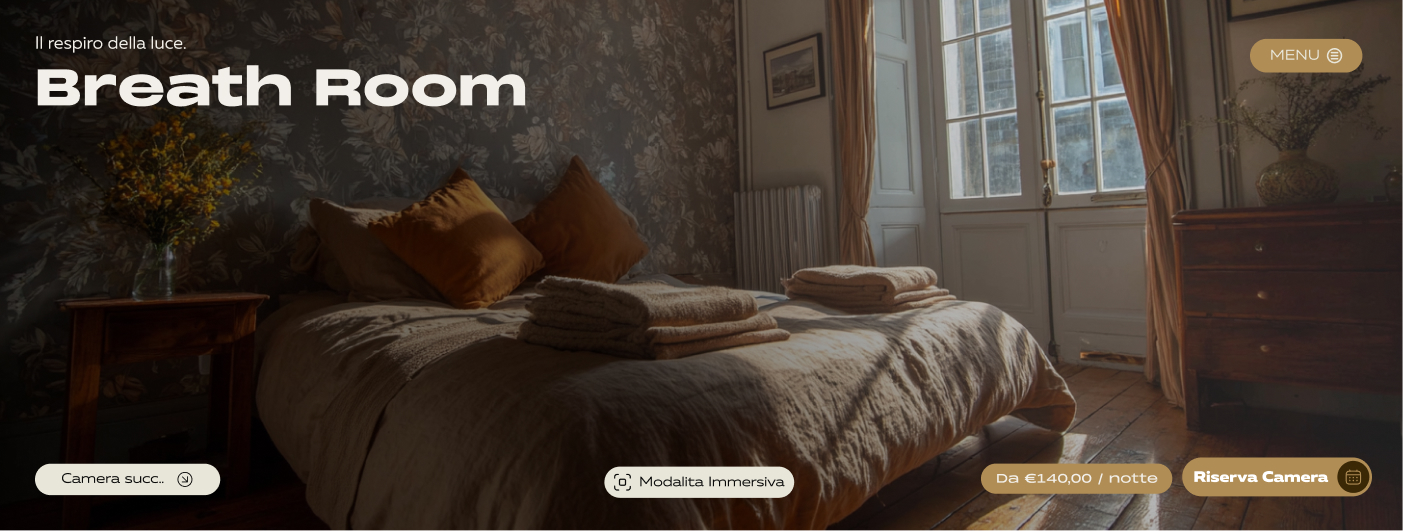
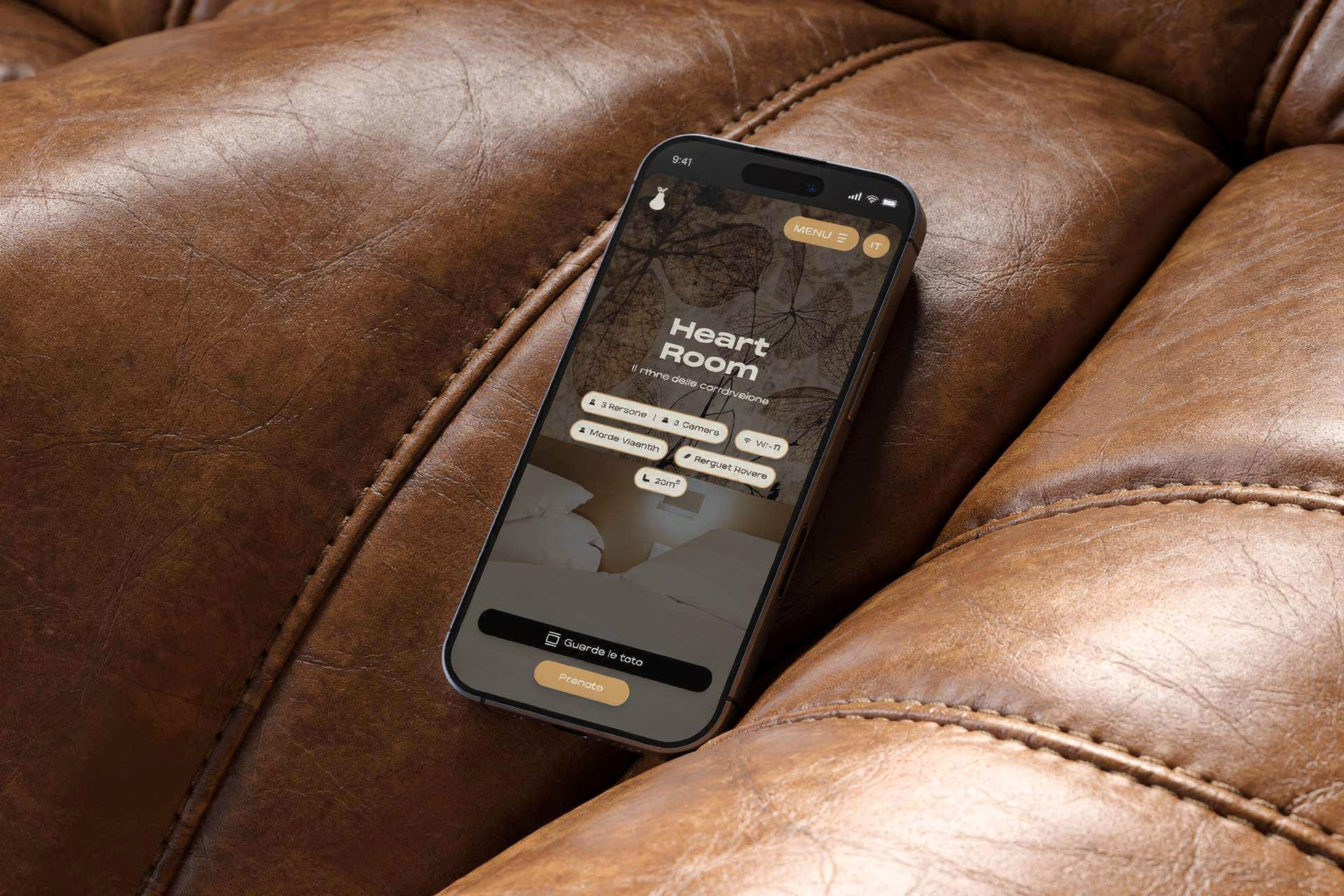
The home is a story, the rooms are a space for choice. Scrolling works in the first case, but creates dispersion in the second. I removed scrolling from the viewing sections and replaced it with direct interaction—one room at a time, everything visible, everything a tap away. On mobile, a drawer rises by itself when needed. You don't look for it, it comes when you need it.
The booking that doesn't kick you out.
All plugins take you out of the site the moment you are ready to pay.
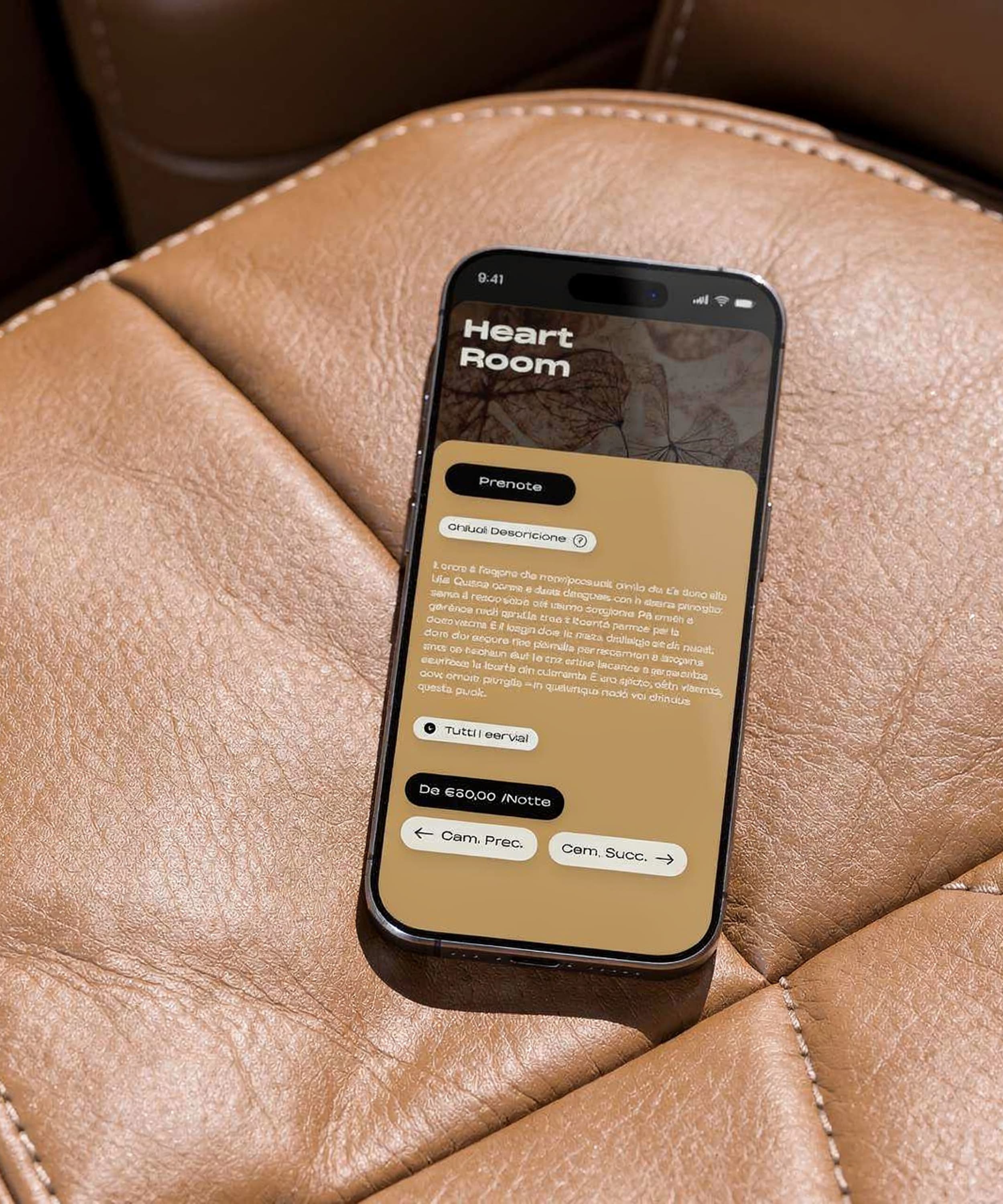
The issue wasn't aesthetic—it was that the checkout interrupts the decisive moment. I designed the calendar integrated into the bar of each room: booked dates already red upon arrival, selection, click book, zero intermediate pages. A transition screen before payment, not to cover loading times, but to keep the tone unbroken. The client chose to keep Booking due to integration constraints. The designed solution remains in the system—waiting for the right moment.
The brand does not exist yet. For now, there is only the idea. It is enough to start.
Eve Character